
PAT testing for landlords is one of the simplest ways to prove that the appliances in your rental are safe. However, many London landlords are unsure whether it is a legal requirement, how often it is needed and what it should cost.
In this guide, we explain the rules, which appliances need checking and, most importantly, how our PAT testing service keeps you covered. As a result, you can protect your tenants, your property and your insurance.
Is PAT Testing for Landlords a Legal Requirement?
In short, there is no law in England that names PAT testing for landlords as a specific requirement. However, you must make sure that any electrical appliance you supply with the property is safe, under the Electrical Equipment (Safety) Regulations 2016 and consumer protection law.
In addition, the HSE guidance on maintaining portable equipment explains that regular checks are the best way to show you have taken care. Therefore, a PAT certificate is your evidence if a tenant is ever hurt or an insurer asks questions.
Also, remember that the 2020 electrical safety regulations cover the fixed wiring, not appliances. As a result, you need an EICR for the wiring and PAT testing for the appliances.
PAT Testing for Landlords of HMOs
However, if you let a house in multiple occupation, the rules are usually stricter. For example, many London councils include appliance safety in their HMO licence conditions, and some ask for a PAT certificate every year.
Because each council sets its own conditions, always check your licence. However, as a rule, PAT testing for landlords of HMOs should be done at least once a year, together with fire alarm and emergency lighting checks.
Which Appliances Need Testing?
When it comes to PAT testing for landlords, you only need to test the appliances that you provide. For example, in a typical furnished or part-furnished let, we test:
- Kettles, toasters and microwaves
- In addition, washing machines, tumble dryers and dishwashers
- Similarly, fridges, freezers and cookers with a plug
- Vacuum cleaners, irons and hairdryers
- Likewise, lamps, portable heaters and fans
- Extension leads and IEC power cables
However, appliances that belong to the tenant are their own responsibility. Even so, it is good practice to remind tenants not to overload sockets or use damaged leads.
How Often Should Landlords PAT Test?
In short, there is no fixed legal interval. Instead, most landlords follow the IET Code of Practice and the HSE guidance. For example, we recommend:
- For example, a PAT test at the start of every new tenancy
- In addition, a retest every one to two years for standard lets
- Also, a retest every year for HMOs and student lets
- Finally, a quick visual check at every inspection visit
As a result, PAT testing for landlords becomes a simple routine, rather than a last-minute job before a new tenant moves in.
How Much Does PAT Testing for Landlords Cost?
In short, our PAT testing for landlords starts from £70 for up to 10 items. After that, each extra appliance is just £1.50. For example:
| Number of appliances | Our price |
|---|---|
| Up to 10 items | £70 |
| 20 items | £85 |
| 30 items | £100 |
| Each extra item | £1.50 |
In addition, if you book your PAT test with an EICR, we can do both on the same visit, so you save time and only need to arrange access once.
What Happens During PAT Testing for Landlords?
First, we carry out a formal visual inspection of each plug, lead and case. Next, we use a calibrated PAT tester to check earth continuity, insulation resistance and, for leads, polarity.
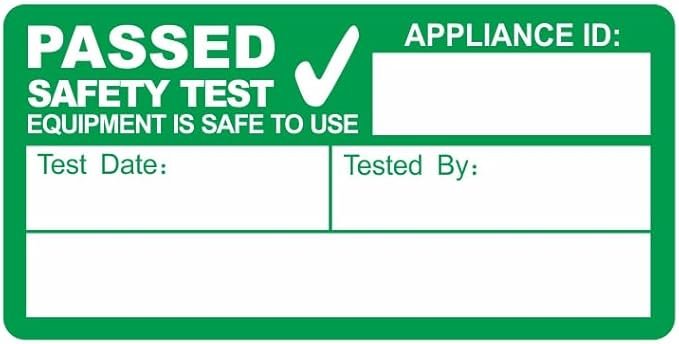
After that, every appliance gets a pass or fail label with the test date. Finally, you receive a full PAT register and certificate, so you can share it with your letting agent or insurer.
What If an Appliance Fails?
Don’t worry, because many failures are quick to fix. For example, we can often replace a damaged plug, a wrong fuse or a worn lead on the spot.
However, if an appliance is unsafe, we label it as failed and advise you to remove it. Therefore, you should replace it before the tenant uses it again.
Keep Your Whole Rental Compliant
However, PAT testing for landlords is only one part of electrical safety. In addition, you need a satisfactory EICR at least every five years, and HMOs also need working fire alarms and emergency lighting.
For example, we regularly combine PAT testing, EICRs, fire alarm servicing and emergency lighting testing in one visit. Also, our guide to why PAT testing matters explains the wider benefits for homes and businesses.
We Can Help
At FindElectrician.co.uk Ltd, we are NAPIT-accredited electricians providing PAT testing for landlords, letting agents and HMO owners across London. For example, we can often attend within a few days, and every appliance is labelled and logged.
Therefore, contact us for a fixed PAT testing price, or visit our PAT testing in London page for more details.
Alternatively, drop your contact details with brief description below and we will contact you within 12 hours.
Frequently Asked Questions (FAQ)
Do landlords have to PAT test in London?
In short, not by a specific law. However, landlords must make sure any appliances they supply are safe, and many HMO licences, letting agents and insurers ask for a PAT certificate.
How much does PAT testing cost for landlords?
Our prices start from £70 for up to 10 items. After that, each extra appliance is £1.50.
How long does PAT testing for landlords take?
For example, a typical flat with 10 to 20 appliances takes about an hour. In addition, the tenant does not need to be home if you arrange access.
Do I need to PAT test new appliances?
In general, new appliances are unlikely to be faulty. However, it is still sensible to include them in your register, so you have a complete record.
Can you do PAT testing and an EICR on the same day?
Yes. In fact, we recommend it, because you only arrange access once and you receive both certificates together.
