
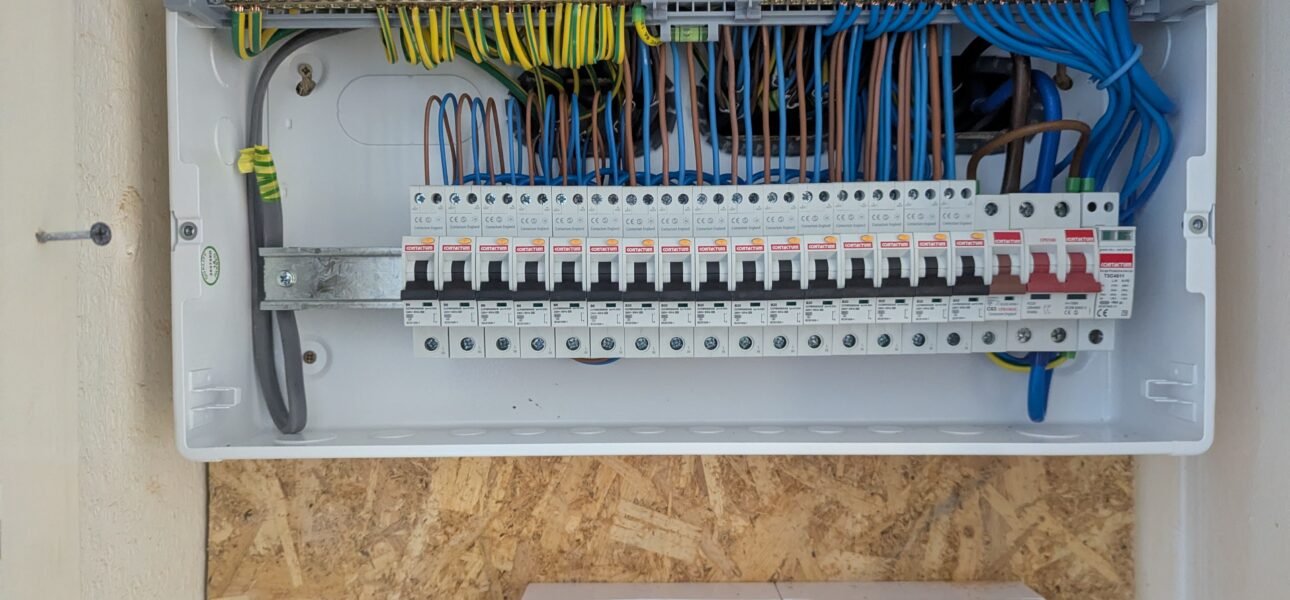
You’re making a cup of tea, the lights go off, and when you check the fuse board one switch has dropped. You flick it back up and it trips again, straight away, an hour later, or only when it rains. If your RCD keeps tripping, it’s doing its job: it has spotted something wrong. The trick is working out what.
Here’s what an RCD actually does, the usual culprits we find in London homes, and a few safe checks you can do yourself before calling an electrician.
What does an RCD do?
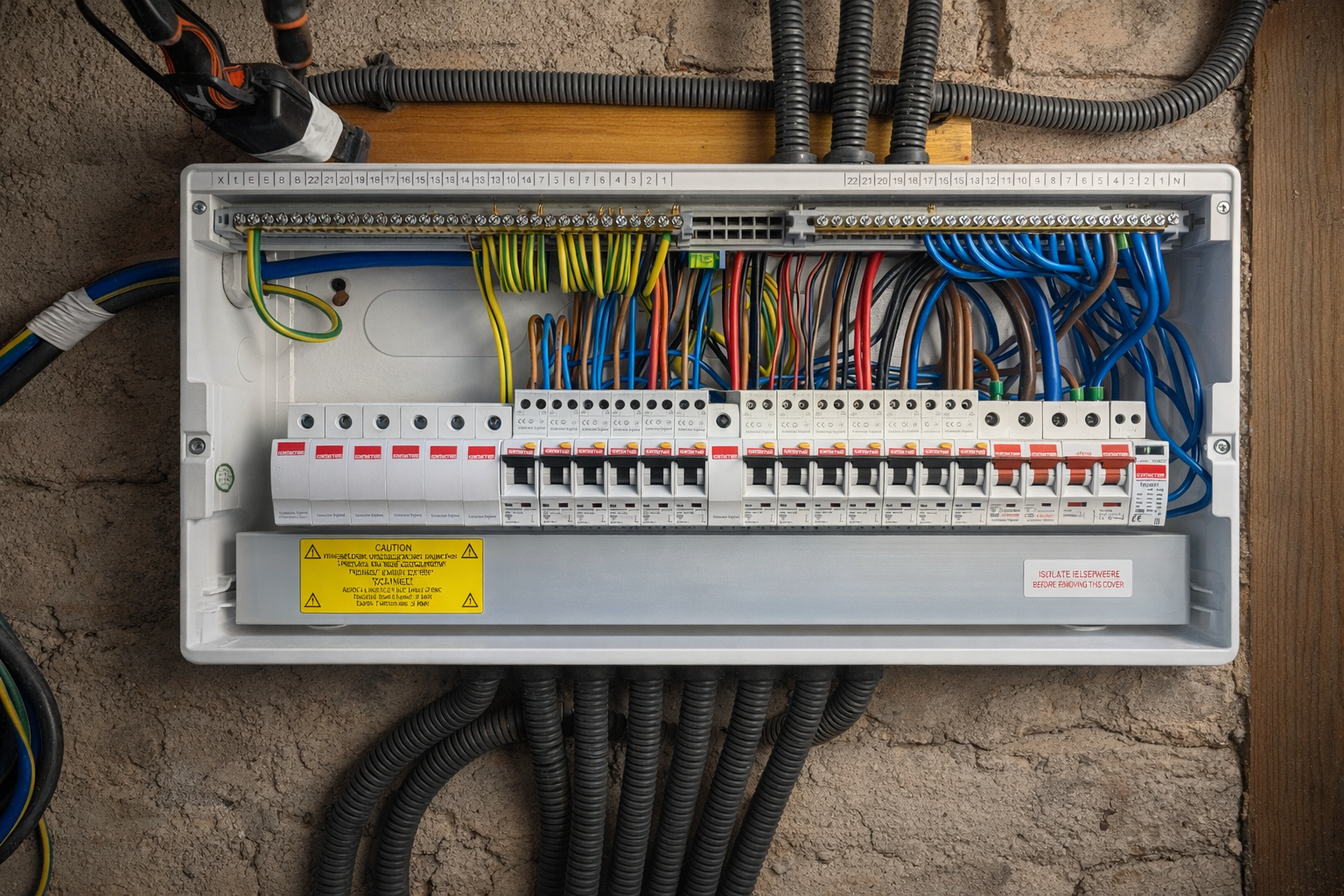
An RCD (residual current device) is the switch on your fuse board with a small “T” or “Test” button. It protects you from electric shock by constantly comparing the electricity going out on a circuit with what comes back. If some of it is leaking away, through a damaged cable, a faulty appliance or a person, it switches off in a fraction of a second.
The smaller switches next to it (MCBs) are different. They trip when a circuit is overloaded or shorts out. On newer boards, each circuit may have its own RCBO, which does both jobs. So if it’s the RCD that keeps tripping, you’re usually looking for a leak to earth rather than too many things plugged in.
The most common reasons an RCD keeps tripping
- A faulty appliance. Kettles, washing machines, dishwashers, tumble dryers, fridges and immersion heaters are the usual suspects. Heating elements and motors break down with age and start leaking current.
- Water where it shouldn’t be. A leak under the bath, rain getting into an outside light or socket, or condensation in a loft junction box.
- Outdoor electrics. Garden lights, outside sockets and shed supplies take a beating from the weather. Our guide to outdoor electrics and RCDs covers this in more detail.
- Damaged cables. A nail or screw through a cable, or a rodent chewing one in the loft or under the floor.
- Lots of small leaks adding up. Computers, TVs and LED drivers all leak a tiny amount to earth. On an older board with one RCD covering half the house, it can add up to enough to trip it.
- A worn-out RCD. They don’t last forever, and an old one can become over-sensitive.
What you can safely check yourself
- Switch off and unplug everything on the circuits that went off. For hard-wired things like a cooker, shower or immersion heater, use their isolator switch.
- Switch the RCD back on.
- If it stays on, plug things back in one at a time, waiting a minute or so between each. If it trips when you plug something in, you’ve probably found the culprit. Leave it unplugged and get it repaired or replaced.
- If it trips with everything unplugged, the fault is likely in the wiring itself. Leave it off and call an electrician.
Don’t keep resetting it over and over, and never tape or wedge an RCD switch on. If you can smell burning, see scorch marks or the board feels warm, leave it off and get it looked at.
When the RCD keeps tripping at night or when it rains
Trips that only happen in wet weather almost always point to water getting into something outside: a garden light, an outside socket, a doorbell transformer or a cable coming through a wall.
Night-time trips are often caused by something that only runs then, such as a freezer defrosting, a timed immersion heater or an outside light on a sensor.
How we find the fault
If it isn’t an obvious appliance, we test each circuit with an insulation resistance tester. It tells us which circuit is leaking and roughly how badly, so we can narrow it down to a cable, an accessory or a junction box instead of guessing. Often it’s a single fault we can fix there and then.
Is it time for a new consumer unit?
If your board has one RCD covering lots of circuits, a single fault anywhere switches off half the house. Modern consumer units use RCBOs, so each circuit has its own protection and a fault in the garden lights doesn’t plunge the kitchen into darkness.
If your board is older, has no RCD at all, or the RCD is getting tired, a consumer unit upgrade is worth thinking about.
Test your RCD twice a year
Press the test button on each RCD every six months. It should switch off straight away, then you can switch it back on. The label next to your fuse board tells you how often (older labels say every three months). If it doesn’t trip when you press the button, get it checked.
Need help?
We’re a family business of NAPIT-accredited electricians covering North, North West, West and South West London. If your RCD keeps tripping and you can’t find the cause, we’ll track it down, fix it and test the circuit before we leave.
If you’d like the whole installation checked, you can also book an EICR.
Tell us what’s happening and roughly where you are, and we’ll get back to you, usually within 12 hours. A photo of your fuse board always helps.
Frequently Asked Questions (FAQ)
Why does my RCD keep tripping with nothing plugged in?
That usually means the fault is in the fixed wiring, a hard-wired appliance or something outdoors, such as a garden light. Leave it off and get an electrician to test the circuits.
Can a faulty appliance trip the RCD?
Yes, it’s the most common cause. Plug things back in one at a time to find which one trips it.
Is it dangerous if my RCD keeps tripping?
The RCD itself is keeping you safe, but the fault behind it needs finding. Don’t keep resetting it or try to bypass it.
How often should I test my RCD?
Every six months, using the test button. It should switch off straight away.
Can rain make my RCD trip?
Yes. Water getting into outside lights, sockets or cables is one of the most common causes of trips in wet weather.
