
What fire alarm does an HMO need?
HMO fire alarm requirements depend on the size and layout of the property, how many people live there and what your council’s licence asks for. In almost every case, though, an HMO needs mains-powered, interlinked alarms with battery backup, and larger HMOs often need a system with a control panel.
As electricians qualified in BS 5839-6, the standard for fire alarms in homes, we install and test HMO systems across London. This guide explains what councils usually expect. However, always check your own licence conditions and fire risk assessment, because they have the final say.

Why interlinked alarms matter in an HMO
Start a fire in the ground-floor kitchen and see who hears it, with and without interlinked alarms.
Choose a setting, then start the fire.
HMO fire alarm grades and categories explained
BS 5839-6 uses grades for how the system works and categories for how much of the building it covers.
| Term | What it means | Where you’ll often see it |
|---|---|---|
| Grade D1 | Mains-powered, interlinked alarms with a sealed backup battery | Smaller shared houses |
| Grade D2 | Mains-powered, interlinked alarms with a replaceable backup battery | Smaller shared houses |
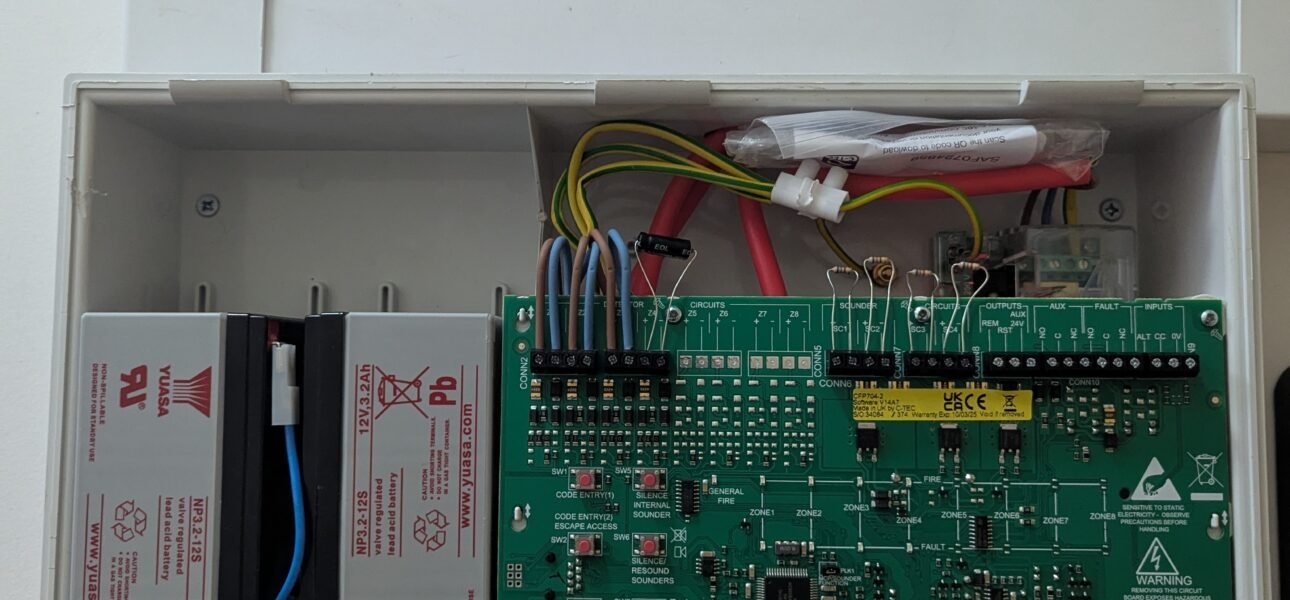
| Grade A | A system with a control panel, detectors and sounders | Larger HMOs over several storeys |
| LD3 | Covers the escape route only | The minimum level of coverage |
| LD2 | Escape route plus higher-risk rooms, such as kitchens and lounges | Many HMOs |
| LD1 | Covers almost every room | Higher-risk properties |
Licence inspection coming up? We install, test and certify HMO fire alarms across London.
Six things councils check in an HMO fire alarm
Licensing officers in London boroughs usually look at these points.
Interlinked alarms
When one alarm sounds, they all should, so everyone in the house hears it wherever the fire starts.
Mains power with backup
Alarms should be wired to the mains with a backup battery, so they keep working during a power cut.
Heat alarms in kitchens
Kitchens normally need a heat alarm rather than a smoke alarm. As a result, it detects a fire without going off every time someone cooks.
Escape route coverage
Hallways and landings on every floor must be covered, because they’re how people get out. Depending on the risk assessment, bedrooms and lounges may need alarms too.
Certificates and records
Councils usually ask for an installation and commissioning certificate, plus records of testing and servicing.
Testing and servicing
Alarms must be kept in good working order. Therefore, regular testing and periodic servicing by a competent person are part of running an HMO.
How often an HMO fire alarm should be checked
Your licence conditions may set exact intervals, but this is a typical pattern.
Press the test button on the system and record the result in a log book.
Panel-based systems need servicing by a competent engineer.
Find the cause, fix it and note what happened in the log.
Replace smoke and heat alarms, as their sensors become less reliable with age.
Review whether the system still matches the fire risk assessment.
Who is responsible for the fire alarm in an HMO?
The landlord or managing agent is. The Management of Houses in Multiple Occupation (England) Regulations 2006 require the manager to keep fire alarms in good working order, and many London boroughs add licence conditions on top.
HMOs with five or more people from two or more households need a mandatory licence, and many boroughs also run additional licensing for smaller HMOs. So it’s worth checking your council’s rules before choosing a system.
How often should an HMO fire alarm be tested?
As a rule, alarms should be tested regularly using the test button, with the results recorded. Councils often expect weekly or monthly tests, depending on the system and the licence.
Panel-based systems also need periodic servicing by a competent engineer, usually every six months. See our fire alarm servicing for details.
HMO fire alarm checklist for landlords
Before your next licence application or inspection, check that:
- Every alarm is mains-powered, interlinked and has a working backup battery
- The kitchen has a heat alarm, not a smoke alarm
- Every hallway and landing is covered, on every floor
- Any alarm older than about 10 years has been replaced
- You have an installation certificate and a testing log
- The system matches your licence conditions and fire risk assessment
For single lets, see our guide on whether landlords need mains-wired smoke alarms.
HMO fire alarm FAQs
What grade of fire alarm does an HMO need?
It depends on the size and layout. Smaller shared houses usually need Grade D alarms that are mains-powered and interlinked, while larger HMOs may need a Grade A system with a panel. Your licence and fire risk assessment decide the final grade.
Can an HMO fire alarm use battery smoke alarms?
Generally not. HMOs are usually expected to have mains-powered, interlinked alarms with battery backup, and battery-only alarms rarely meet licence conditions.
Does an HMO fire alarm need a heat alarm in the kitchen?
Yes, in most cases. A heat alarm detects a fire without going off every time someone cooks.
Who is responsible for testing the fire alarm in an HMO?
The landlord or managing agent. They should arrange regular testing, keep records and have the system serviced by a competent person.
Do HMOs need emergency lighting?
Some do, particularly larger HMOs or those with long or complex escape routes. Your fire risk assessment will say whether it’s needed.
How much does an HMO fire alarm cost?
It depends on the size of the property and the grade of system required. Send us the floor plan or a few photos on WhatsApp, and we’ll give you a free quote.
Need an HMO fire alarm installed or upgraded?
We’re qualified in BS 5839-6 and install, test and certify HMO fire alarms across London. See our landlord electrician service, or message us for a free quote.
Speak to a London electrician today
Call, email or WhatsApp us for a free quote. For emergencies, we answer 24/7.
