
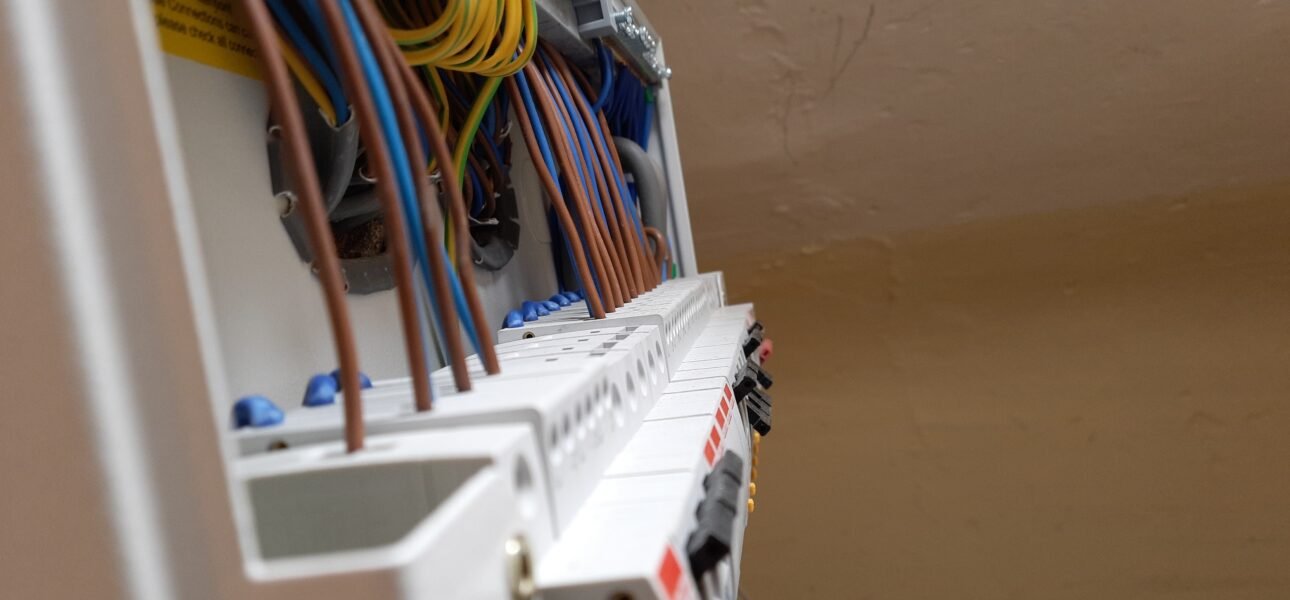
Plenty of the homes we work in across London still have an old fuse box. Some are fine for now. Others are 40 or 50 years old, with wire fuses, no RCD protection and a wooden backboard that's seen better days.
An old fuse box isn't automatically dangerous, but it usually means the protection in your home is well behind today's standards. Here's how to tell what you've got, what the warning signs are, and when it's worth replacing.
Which one do you have?
Pick the picture that looks most like yours to see what it means for your home.
There’s no RCD protection, and fuse wire is easy to replace with the wrong size. We’d recommend replacing it with a modern consumer unit.
Safer than fuse wire, but still with no RCD protection against electric shock. It’s worth upgrading.
Circuit breakers are an improvement, but without RCDs you’re not protected against electric shock. Upgrading the board usually fixes this.
You have RCD protection. Press the test button regularly, as the label on the board says, and keep an EICR up to date.
What does an old fuse box look like?
- Rewireable fuses: white ceramic or plastic carriers with a thin piece of fuse wire inside, which you pull out to repair.
- Cartridge fuses: similar carriers with a small sealed fuse inside.
- A wooden backboard, or an old cast iron or brown Bakelite switch.
- No "Test" button anywhere, which usually means there's no RCD.
- Spare fuse wire and handwritten labels nearby.
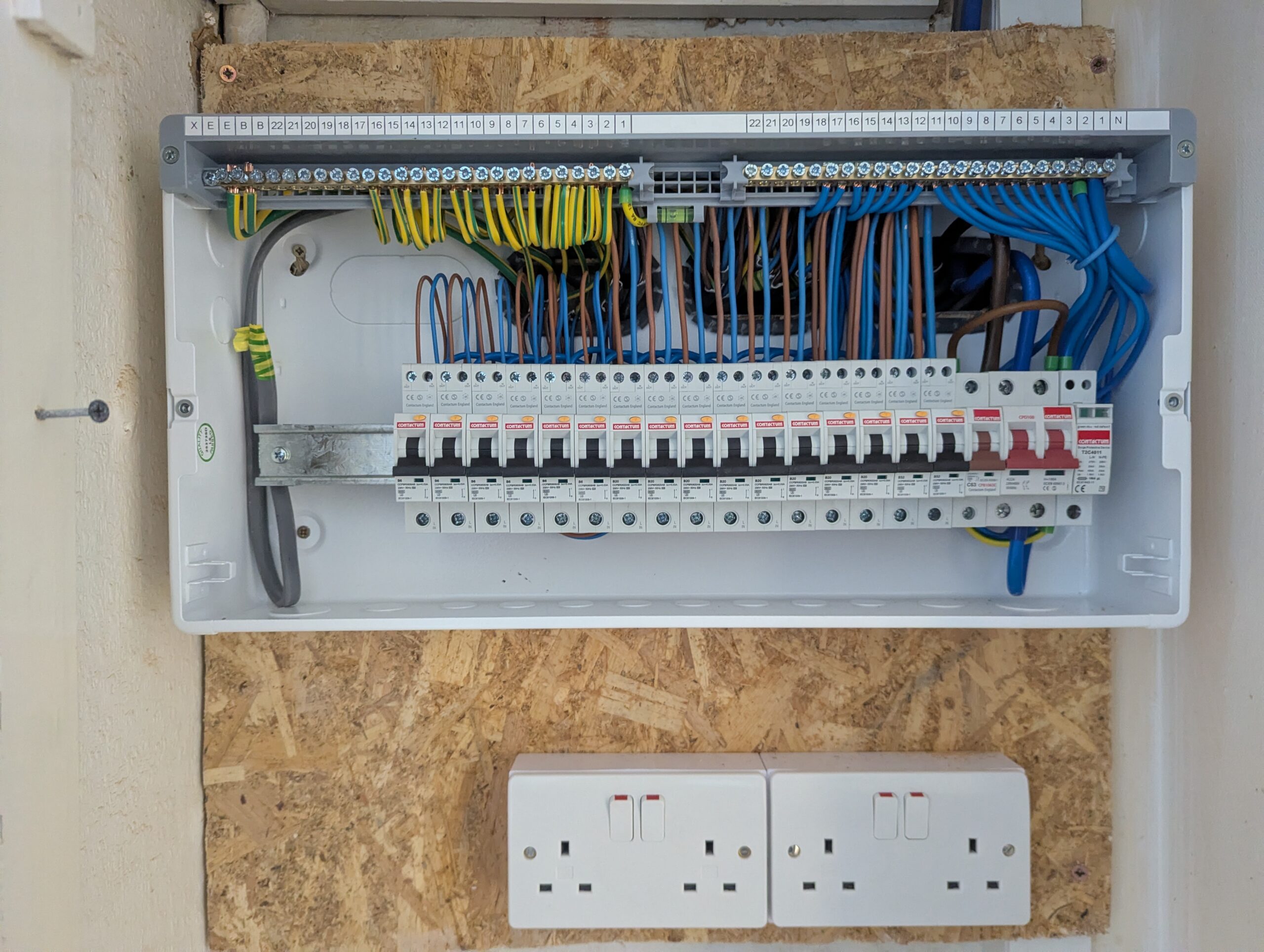
A modern consumer unit has a row of switches (circuit breakers) instead of fuses, at least one RCD or individual RCBOs, and since 2016 it has to be in a metal or other non-combustible case when it's fitted in a home (NBS).
Why an old fuse box can be a problem
- No RCD protection. An RCD switches off the power in a fraction of a second if someone gets a shock. Many old fuse boxes have none, especially on sockets and lighting.
- Wire fuses are easy to get wrong. Repairing a fuse with the wrong thickness of wire, or worse, something that isn't fuse wire at all, means the circuit isn't properly protected.
- Signs of heat. Scorch marks, a burning smell, brittle cables or crackling around the board need checking straight away.
- Too few circuits. Old boards often have a handful of circuits for the whole house, so one fault takes out a lot.
- Plastic and wood. Non-combustible consumer units became a requirement in homes after fires were linked to poor connections inside plastic units. Existing plastic units don't have to be replaced just for that, but it's something we look at.
Worried about your old fuse box? We can check it and give you a fixed quote.
Signs your old fuse box needs replacing
It's worth getting an electrician in if:
- Fuses blow or switches trip regularly
- There's no RCD and you're having a new kitchen, bathroom or extension
- You can smell burning or see scorch marks near the board
- The board is wooden, cracked or has exposed parts
- An EICR has flagged problems with it
- You're planning something big, like an electric shower, EV charger or heat pump
Why a fuse alone won’t protect you
Simulate a small earth leak, such as someone touching a live part, and see which device reacts.
Fuses and circuit breakers protect the cables from overloads and short circuits. The current that passes through a person is far too small for them to notice, which is why only an RCD protects you from electric shock.
Does an old fuse box fail an EICR?
Not automatically. An EICR looks at how safe the installation is, not just its age. But things that often come with an old fuse box, such as missing RCD protection or signs of overheating, are commonly given a code that needs action. Our guide to C1, C2 and C3 codes explains what each one means.
What a fuse box upgrade involves
Before fitting the new board, we test every circuit. Modern RCDs trip on faults an old fuse box would happily ignore, so any problems need fixing first. If you've had trouble with an RCD that keeps tripping, this is often where the cause shows up.
Replacing a fuse box is notifiable work under Part P of the Building Regulations, so it has to be done by a registered electrician or signed off by building control. You'll get an Electrical Installation Certificate, and a Building Regulations compliance certificate follows.
Frequently asked questions
Is an old fuse box dangerous?
Not necessarily, but many have no RCD protection and use wire fuses that are easy to repair wrongly. It's worth getting it checked, especially if it still has wire fuses.
Do I have to replace my old fuse box?
There's no law that says a homeowner must. Landlords, though, need a satisfactory EICR, and an old fuse box can make that harder.
Can I replace a fuse box without a rewire?
Often, yes, if the wiring tests well. We test every circuit first, so you'll know before any work starts.
Do plastic consumer units need replacing?
No. Since 2016, new units in homes have to be non-combustible, but existing plastic units don't have to be replaced just because of that.
Will I get a certificate?
Yes. You'll get an Electrical Installation Certificate, and because it's notifiable work, a Building Regulations compliance certificate too.
Ready to replace your old fuse box?
We replace old fuse boxes with modern consumer units across London, test every circuit and register the work. See our consumer unit upgrades service, or message us for a free quote.
Speak to a London electrician today
Call, email or WhatsApp us for a free quote. For emergencies, we answer 24/7.
